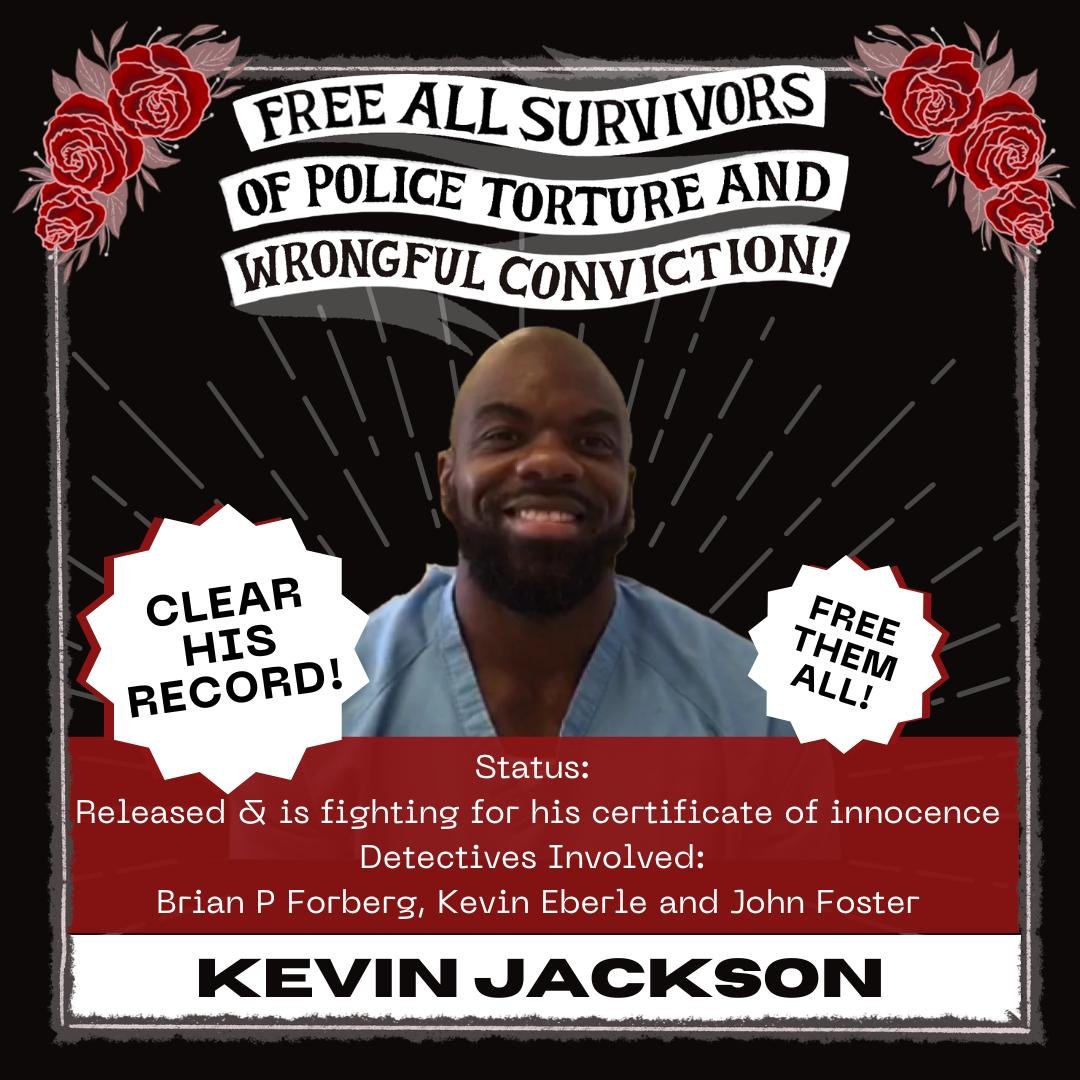
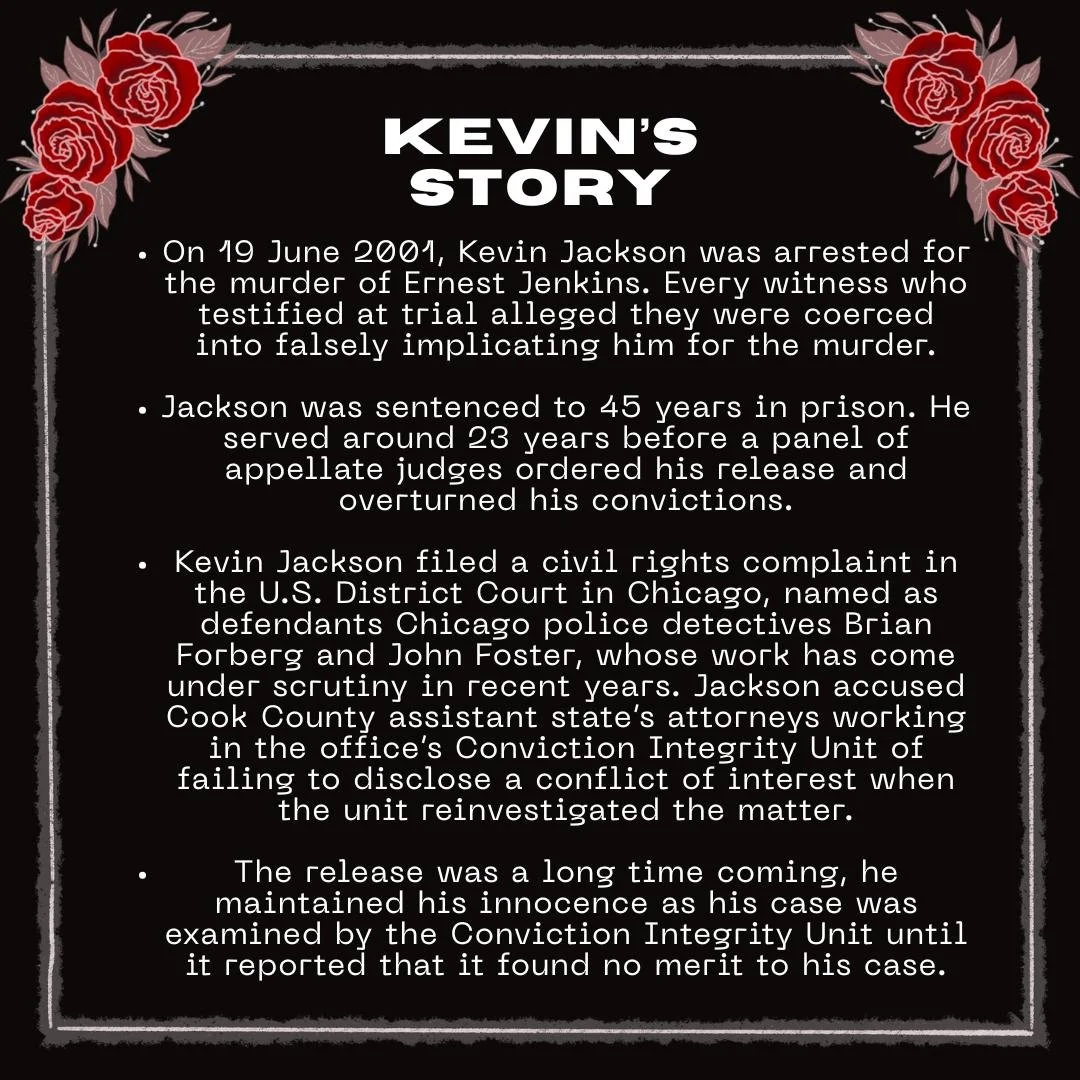
On 19 June 2001, Kevin Jackson was arrested for the murder of Ernest Jenkins that occurred approximately a month earlier. During the case, every witness who testified at trial alleged that they were coerced into falsely implicating Mr. Jackson for the murder
Vernon Clay was detained and interrogated on 2 June 2001. According to the contemporaneous, handwritten notes of Detective Foreberg and his partner John Foster, Clay told police about at least four individuals who were in the vehicle where the shots originated. In the typed supplementary reports, all mention of these other suspects is omitted. Further, there is no evidence police ever attempted to locate any of these individuals. During his testimony at trial, Clay repudiated every statement police claimed he made during his interrogation.
Clay was interrogated on 11 June 2001 during a 33 hour-long detention. During this time, Clay was not permitted to leave, taunted for being locked up on his birthday (12 June 2001), denied access to a phone, and denied access to legal counsel. Mr. Clay testified that, upon release, he was told to sign a piece of paper to return his property; the State contends that Mr. Clay signed a statement that was given to Detective Foreberg at 2:30 AM on 13 June. (People v. Kevin Jackson, 2018 IL app (1st) 171773 ❡❡17-20 (“Jackson I”).)
Brandi Grant was picked up and detained at the 2nd District police station for multiple days. When she was taken in, she was three months pregnant. Detective Foreberg did not ask her any questions; instead, he told her that Kevin Jackson did the shooting and showed her statements from others implicating him. Grant was told if she did not sign a statement she would be charged as an accessory, be forced to have her baby in jail, and then her child would be taken away from her. Eventually, Grant signed the statement that police wrote for her. Grant was held in custody and escorted to the grand jury where she was told immediately prior to testifying that if she did not say the same thing that was written in the statement she would not be allowed to go. The same officers who escorted Grant to the grand jury waited for her outside of it.
Shemika Mason was detained on 12 June 2001. Detective Foreberg (and Foster) picked her up while she was sitting outside of her home. They threatened her with an outstanding warrant, so she signed a statement in conformity with the officers’ version of events. (Jackson I, 2018 IL App (1st) 171773 at ❡❡ 22-25.)
Quina Davis was held for three days after giving police a statement on the night of the shooting. During the three-day interrogation, she was told that Kevin Jackson was the shooter, she was in a relationship with him, she was flirting with Meechie, and that was the motive of the shooting. Davis offered to take a lie-detector test but was told she failed it. The detectives continued to yell at her, curse her out, call her a liar and threaten her – including saying she would be charged as an accessory to murder, she would not be allowed to go home ever again, and that her daughter would be taken away and she would not be allowed to see her ever again. Even after her release, she was still harassed by police to the point she had to move homes. After a month, Davis returned home and the harassment resumed. At one point, Davis had to hide from the police in the attic with her one-year-old daughter. Davis then filed a complaint with the Office of Professional Standards.
Log No. 272791
September 24, 2025 Chicago Tribune:
“Jackson was sentenced to 45 years in prison in the 2001 killing of Ernest Jenkins. He served around 23 years before a panel of appellate judges ordered his release and overturned his convictions following a denial by a Cook County judge.
An Illinois appeals court called his case “extraordinary” and filed a federal lawsuit against the police and prosecutors who investigated and tried his case, alleging that they coerced witnesses and hid evidence that could point to his innocence.
Kevin Jackson, 45, filed a civil rights complaint in U.S. District Court in Chicago, named as defendants Chicago police detectives Brian Forberg and John Foster, whose work has come under scrutiny in recent years. Jackson also accused Cook County assistant state’s attorneys working in the office’s Conviction Integrity Unit of failing to disclose a conflict of interest when the unit reinvestigated the matter years later.
The release was a long time coming for Jackson, who maintained his innocence as his case was examined by the Conviction Integrity Unit until it reported that it found no merit to Jackson’s case.
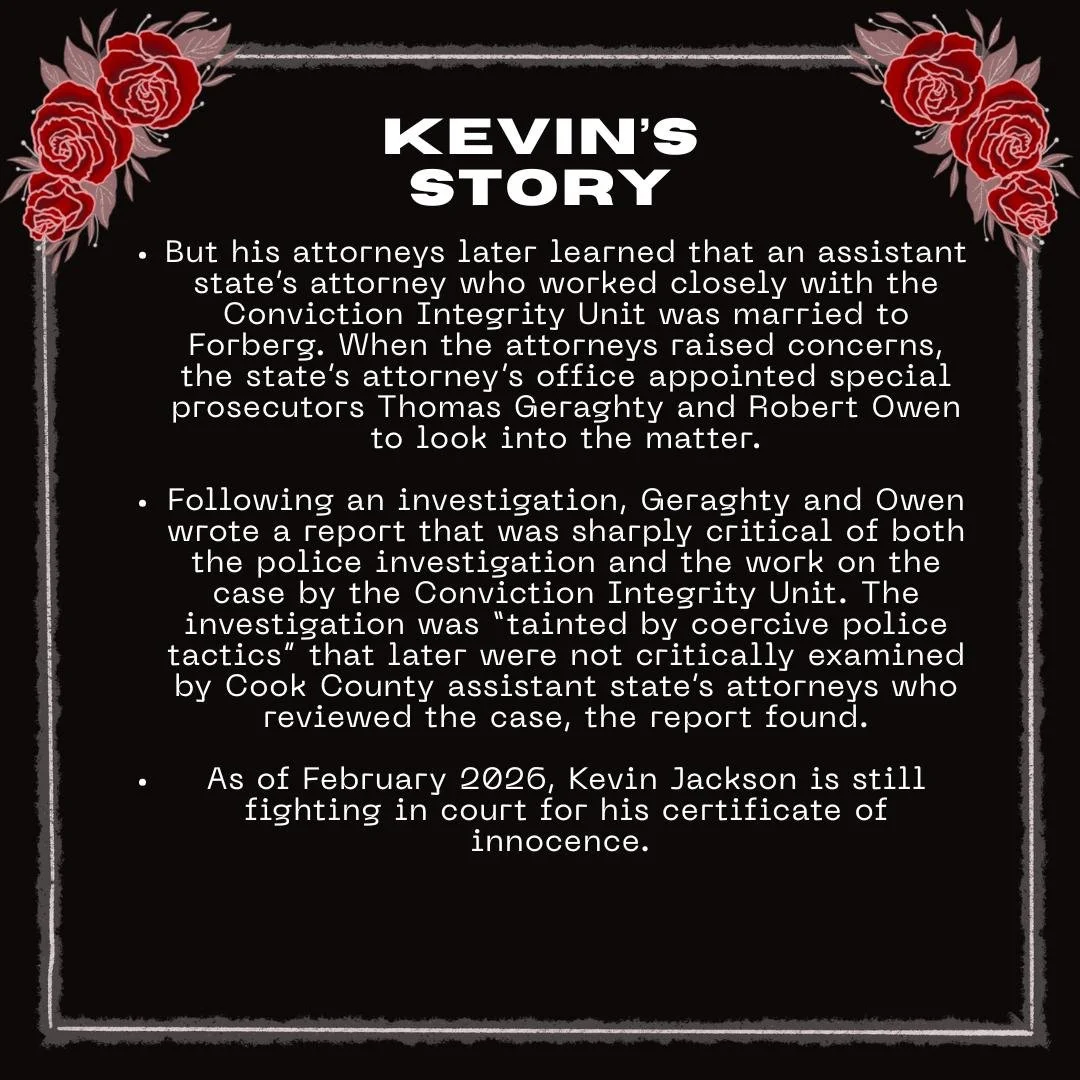
But Jackson’s attorneys later learned that an assistant state’s attorney who worked closely with the Conviction Integrity Unit was married to Forberg. When the attorneys raised concerns, the state’s attorney’s office appointed special prosecutors Thomas Geraghty and Robert Owen to look into the matter.
Following an investigation, Geraghty and Owen wrote a report that was sharply critical of both the police investigation and the work on the case by the Conviction Integrity Unit. The investigation was “tainted by coercive police tactics” that later were not critically examined by Cook County assistant state’s attorneys who reviewed the case, the report found.
As of February 2026, Kevin Jackson is still fighting in court for his certificate of innocence.