ATTORNEY WORK PROUDUCT – DRAFT FOR CLIENT REVIEW
IN THE CIRCUIT COURT OF COOK COUNTY CRIMINAL DIVISION
PEOPLE OF THE STATE OF ILLINOIS, Respondent, v CURTIS CROFT, Petitioners.
Case No. 86 CR 9932
Hon. Judge Lawrence Flood Presiding
SUCCESSIVE PETITION FOR POSTCONVICTION RELIEF
NOW COME Petitioners, CURTIS CROFT, through his undersigned counsel, Jennifer Blagg and Eric Bisby, and respectfully files this Successive Post Conviction Petition. Croft files this petition pursuant to Article 122 of the Illinois Code of Criminal Procedure of 1983, as amended (725 ILCS 5/12 2-1 et seq.).
INTRODUCTION
Curtis Croft is serving life sentences for his purported involvement in the kidnapping, sexual assault, and murder of 16-year-old Kim Boyd in 1986. Croft was 17 when Boyd was killed. Croft, along with 18-year-old Demetrius Henderson, 18-year-old Alonzo Woodard, and 18-year-old Kevin Campbell, was charged with charged with Boyd’s rape and murder. Croft and Henderson were convicted on her rape and murder and the other two were convicted of sexual assault only. Croft was sentenced to life in prison. Henderson was sentenced to the death penalty.
There is no dispute that on July 13, 1986, a passerby discovered Boyd’s body in an alley on the southside of Chicago. She was stabbed over 35 times, including 18 times in the face. and head, and seemingly run over by a car. She had broken bones. She had other blunt-force injuries.
Police quickly learned that the night before her body was discovered, Boyd had been at a party at Croft’s house. Croft, Henderson and their respective girlfriends were also present. Police reports indicated that Boyd came to the party with brothers Anthony and Alonzo Woodard, Kevin Campbell, and Boyd’s female friend.
The State’s star witness was Anthony Woodard. Woodard testified that he witnessed Henderson and then Croft sexually and physically assault Boyd for some time in the living room at Croft’s house. He said that next, Henderson used a knife to force his brother, Alonzo, and Kevin Campbell also to assault her. Thereafter, Anthony claimed that he watched Boyd be led out of the house, and that he then watched Croft and Henderson drive away from the house in Henderson’s car, with the implication that they did so with Boyd in the trunk.
Aside from Anthony Woodard’s testimony about what purportedly occurred that night, the primary evidence against Croft at trial was his own confession—a confession that Croft has long maintained was the result of police torture. His co-defendant Henderson also confessed and likewise claimed the confession to be the byproduct of coercion and torture. In both teenagers’ confession they claim to have ejaculated during the sexual assault of Boyd. The claimed motive for killing her was Henderson’s anger with Boyd for her purported unfaithfulness to Alonzo Woodard with his brother, Anthony, and Henderson’s subsequent fear they would get in trouble for sexually assaulting her at Croft’s house.
On April 11, 2017, this Court granted the Croft post-conviction DNA testing in order to find some answers about what happened to Boyd. The results of the DNA testing show that there was sperm found in Boyd’s vaginal, rectal and oral swab specimens. There were multiple DNA profiles found on the victim’s vaginal, rectal and oral swabs. Testing connected none of those profiles to Henderson or Croft – in fact, testing specifically found that there was a mixture of the DNA of at least two individuals in the victim’s vaginal swab specimen, and neither Croft nor Henderson were the contributors.
Ultimately, this means that the majority of evidence that contributed to Croft’s conviction – his confession and Anthony Woodard’s testimony – is now invalidated by science. What is more, Croft has uncovered a General Progress Report (GPR) that implicates Anthony Woodard as the murderer. The GPR establishes that CPD’s canvass of the neighborhood revealed a witness that told police she heard a woman yelling “Anthony don’t hit me no more,” from the alley where the police found Boyd’s body.
Croft has also obtained affidavits from Kevin Campbell and Alonzo Woodard that support his innocence. Both men contradict Anthony’s trial testimony, admitting that neither Croft nor henderson forced them to have sexual intercourse with Boyd at knife point. X also explains that Anthony is an alcoholic that [WHATEVER]
In sum, DNA evidence proves that Croft did not sexually assault Boyd. Instead, the evidence establishes that Croft’s confession was coerced and that Boyd’s likely assailant was Anthony, a teenager that no "confession" placed on the murder scene. This crime was obviously a crime of passion. Either Woodard brother would be the most logical suspect to have been that enraged with Boyd, as both learned that she was sleeping with the other on the night she was murdered. The GPR now points the finger squarely at Anthony, the only person that was not charged with this crime, ans the only person to testify against all four teenagers. Given these results, at bare minimum there is a likelihood that were these men retired, the outcome would be different.
Finally, Croft is entitled to a new sentencing hearing. Croft was sentenced to life imprisonment based on the judge’s false belief that he sexually assaulted Boyd. Because that conviction is now refuted by DNA evidence, Croft is entitled to a new sentencing hearing.
FACTUAL BACKGROUND
A. Kim Boyd Is Found Brutally Murdered
The morning of Sunday, July 13, 1986, the body of 16-year-old Kimberly Boyd was discovered in an alley behind 6039 South Carpenter on Chicago’s south side. (R.1141-43, 1155-58, 1167-69.)1 She had numerous injuries including stab wounds to her head, face, neck, hands, abdomen, back and buttocks. (R.1207-10.) She said blunt force injuries including facial bruises, bruises and abrasions to her elbows, knees and back, and “skin slippage” to her face and right hip consistent with a scalding burn. Her right thigh bone and several ribs were broken. (R.1213-16.) Pathology testimony established that the stab wounds caused her death. (R.1215.)
1 References to the record are to the Report of Proceedings of Demetrius Henderson’s trial unless otherwise noted. Similar evidence was presented at Croft’s trial except for the distinctions described in this Petition.
B. Police Obtain Confessions from Multiple Purported Assailants
Ms. Boyd’s body was found on July 13, 1986. Police canvassed the neighborhood to determine if people who lived near where the body was found heard anything the night before she was found. One woman reported hearing someone say, “Anthony, don’t hit me no more,” at around 4:00 and 5:00 a.m. Another neighbor reported hearing dogs barking around 4:30 a.m. (Exhibit 1, GPR Excerpt.) Ms. Boyd’s brother identified her on July 15th. After Ms. Boyd was identified, police quickly learned that Boyd had been with Kevin Campbell and the Woodard brothers the night before her death. Police located and arrested Campbell and the Woodards and interviewed them. They then arrested Croft and Henderson and interviewed them. They obtained the statements of all of these young men on July 17 and July 18, and closed the case in the early morning hours of July 18. In total, the case was investigated for five days.2
2 At the time of the filing of this petition, Petitioners only have copies of statements and police reports obtained through Freedom of Information Act Requests (although Petitioners have copies of Croft’s and Henderson’s purported confessions as they were read into the record at trial). With the filing of this Petition, Petitioners seek the opportunity to subpoena copies of the police investigative files related to these cases to obtain unredacted copies.
During their interrogations, police obtained statements from Anthony Woodard, Alonzo Woodard, Kevin Campbell, Demetrius Henderson, and Curtis Croft. These are the only statements providing any information about who was responsible for Boyd’s death; no one else who was supposedly at the party that night gave a statement that narrowed down who could have been responsible for her death.
These statements, attached as Exhibits 2 through 6, have profound contradictions to one another, including in the descriptions of the purported assault.
Henderson's Statement3
Henderson’s court-reported statement asserted that he assaulted Boyd orally and vaginally. and ultimately ejaculated during the vaginal assault. According to Henderson’s statement, Croft assaulted her orally and ejaculated into her mouth. Kevin Campbell also assaulted her orally and ejaculated. It also provides that Alonzo Woodard assaulted her orally. What’s more, according to Henderson’s statement, when Croft and Henderson left the room, the Woodard brothers were still inside.
3 At the time of filing, Croft did not have access to unredacted copies of witnesses’ statements or Grand Jury testimony.
Curtis Croft’s Statement
Curtis Croft’s handwritten statement indicates that Henderson, Kevin Campbell, and Alonzo Woodard assaulted Boyd vaginally. In the statement, however, Mr. Croft seemingly denied he himself had sex with the victim.
Kevin Campbell’s Statement
Kevin Campbell purportedly gave detectives a statement that they memorialized in a GPR. According to that statement, Campbell peeked into the downstairs room in Croft’s home and saw Henderson hit Boyd with a roll of wallpaper and then ask her to perform oral sex on him. After Henderson and Croft had been in the room with her for some time, Henderson called the Woodards and Campbell into the room and ordered Boyd to perform fellatio on Campbell and Alonzo Woodard. Henderson also assaulted her vaginally.
Alonzo Woodard Statement
Alonzo Woodard’s statement claims that when Croft and Henderson were in the downstairs room alone with Boyd, Campbell opened the door and Croft then told them, “Why don’t you get some?” Alonzo claimed he and Campbell refused, and that Croft then said he “had something on him” so Campbell then assaulted Boyd orally. After that, Croft forced Boyd to perform fellatio on Alonzo Woodard.
Anthony Woodard Statement
Anthony’s statement and his Grand Jury testimony minimized his own role — it says he only watched as Croft and his brother assaulted Boyd orally and Henderson and Campbell assaulted her vaginally. His statement said nothing about Mr. Henderson forcing others to assault the victim. It also provides no explanation why a witness might have heard the victim use his name at the scene of his murder.
Croft and Henderson Seek, Unsuccessfully, to Suppress Their Statements
Both Crofi and Henderson have maintained that their confessions were involuntary and a byproduct of police coercion. Both filed unsuccessful motions to suppress these statements. Both specifically testified at these motions that they were physically and psychologically abused, and Henderson’s trial counsel further alleged in his motion that he suffered injuries to his inner ear due to these beatings. (R2465.) After those motions were denied, the cases proceeded to trial.
C. Petitioners’ Trials and Convictions
Henderson’s case was heard by a jury. Croft waived his right to a jury, as did co-defendants Woodard and Campbell, but the cases were heard. jointly. (R.601; 636-37).
Wendy Herron, then 17 and the girlfriend of Curtis Croft, testified that at 8:00 p.m. on Saturday, July 12, 1986, she, Croft, and their baby went to dinner with Demetrius Henderson, his girlfriend Yolanda Harris, and their baby. They all went to Croft’s house thereafter; his mother was hospitalized and not home. They talked, listened to music, and then left around 1:00 or 2:00 a.m. Herron dropped her baby off and again went out with Croft and Henderson. (R.1267-68.) The group met up with Alonzo and Anthony Woodard, Kevin Campbell, and two girls, one of whom was the victim, Kimberly Boyd, and the group went back to Croft’s house. (R.1278-84.) They drank and listened to music, and around 3:45 a.m., Henderson and Croft drove Wendy Herron home. Herron testified that when she left, Boyd, the Woodard Brothers, and Kevin Campbell stayed at the house. (R.1288-90.)
Anthony Woodard, who was only 16 at the time he testified, gave testimony that squarely implicated Henderson and Croft in this crime but absolved Anthony, his brother Alonzo, and their friend Kevin from any responsibility. While his pre-trial statements to Assistant State’s Attorneys, police, and the Grand Jury likewise attempted to absolve his brother and his brother’s best friend by saying Henderson and Croft forced the sexual acts, at trial, he upped the ante. He claimed for the first time during his trial testimony that all the sexual acts performed by his friends were done so because both Croft and Henderson ordered them to perform the acts at knifepoint. (R.1681, 1687, 1690, 1704, 1720, 1786, 1991.)
Anthony testified that at the get-together the night of July 12, at some point the only people who remained at the house were the Woodard brothers, Kevin Campbell, Croft, Henderson, and Boyd. He claimed that at some point Croft and Henderson took him and Boyd into a television room in Croft’s basement. There, he claimed that he watched Henderson strike Boyd twice in the jaw and force her to remove her pants. He testified with specificity that both Croft and Henderson had oral and vaginal sex with Boyd. (R.1511-16, 1531-32.) He testified that Henderson assaulted Boyd on the floor. (R.1516.) Woodard also offered, for the first time, that he tried to stop Henderson and Croft but refrained from doing so after he saw Croft had a knife. Croft then ordered Boyd to perform an act of oral copulation upon him, which she did.
According to Anthony, Campbell and his brother, Alonzo, tried to get into the room, apparently to rescue Boyd, but could not get through a door Croft and Henderson had supposedly blocked. (R.1517-18.) After having intercourse with Boyd, Henderson opened the door and, with a knife, forced Alonzo and Campbell to enter the room. Henderson and Croft then forced Alonzo Woodard and Kevin Campbell to have sex with Boyd. (R.1520-1521,1605-1606). Croft held a knife to Alonzo, pulled Alonzo’s pants down and pushed him towards Boyd. Henderson had a knife in his back pocket. Anthony testified that after the group of men finished assaulting Boyd, Henderson took her into the bathroom and she came out with Comet cleanser all over her face. (R.1522; R1810.)
Anthony testified that it was Henderson’s decision to kill Boyd. Croft blindfolded her with a brown pair of pants and led her out of the house to the back. Henderson drove a car to the rear of the house and then back to the front, where the Woodards and Campbell were waiting in a separate car. Campbell supposedly asked where Boyd was and Croft patted the trunk and said he would take her home. (R.1525-29.) Woodard claimed that Henderson and Croft then drove off in the car, The Woodards and Campbell tried to follow them but lost them after the group saw Henderson drive past Boyd’s house. (R.1530-31.)
Felony Review ASA Bernard Murray testified about the course of the investigation. The evening of July 17th he spoke with the Woodard brothers, Campbell, and Wendy Herron, and released them all from custody several hours later. He then spoke with Henderson and Croft. According to ASA Murray, Croft gave an oral statement admitting that he and Henderson killed Boyd after driving her to the alley where her body was found. (R.1811). Afterwards, Croft refused to give a court reported statement. (R.1818-19). Henderson, on the other hand, initially denied involvement. However, after police took Croft into the room with Henderson and had him repeat what he had told police, Henderson supposedly agreed to give a court-reported statement. (R.1585-87.) Henderson’s and Croft’s respective statements were published at their trials (Henderson’s was admitted, and Croft’s was introduced through testimony from the ASA about what he supposedly said) (R.1594, 1600-17; 1806-1821) In addition to the above description of Henderson’s confession, Henderson’s statement provided that he and Croft drove Boyd in Henderson’s car to the alley where her body was found, took her out of the trunk, and both stabbed her, and then ran her over with the car until they believed she was deceased. (R.1611-14.)
There was no physical evidence presented at either trial, although there was some discussion on the record at Henderson’s trial about the state of the physical evidence at the scene. At Henderson’s trial, the State indicated it was going to call or wanted to stipulate to the testimony of Pamela Fish about her testing of purported blood recovered in the trunk of Henderson’s car. (R.1858.) The State characterized Fish’s potential testimony as being that blood recovered at the scene (presumably Boyd’s) was Type O blood and there was “activity . . . indicating of’ the substance supposedly found in Henderson’s trunk as being Type O blood, but there was “an insufficient amount of sample” to determine if it was human blood. (R.1859.) The prosecution also proffered that the swabs from the sexual assault kit contained no sperm in either the oral, vaginal, or rectal samples. (R.1860.) The State tried to admit this testimony as rebuttal, to which defense counsel objected. The State argued this was true rebuttal because it would not have come into the case in chief. The State argued, “Why would, in God’s name, would we put in our case in chief the fact that swabs were taken from the victim and no sperm was found?” (R.1878.) The Court ruled that the State could offer the blood evidence in rebuttal if it wanted, but the State never did so, so the evidence the jury heard was silent on the issue of forensic evidence. (R.1879.)
Croft testified on his own behalf at trial. Per his account, there came a time at the party when Henderson, Anthony and Boyd went into the television room and later Campbell followed. Croft entered and saw Campbell having sex with Boyd. Croft became angry and told them all to leave. (R.2034, 2049-50.) Croft did not have sex with Boyd. (R.2020.) When they left, the others left the house through the rear door, while Croft telephoned his girlfriend Jackie and said he was coming over. Croft left his house. (R.2021, 2051.) He denied hearing any discussion about killing Boyd and denied that Boyd was blindfolded or placed in the trunk. (R.2038-39.)
He testified that the Woodard brothers and Campbell were in Alonzo’s car and Boyd was in the back seat of Henderson’s car. Croft and Henderson supposedly got into Henderson’s car and left. After a while, Alonzo’s car was no longer behind them. When they arrived at Jackie’s house, Croft knocked on the door several times but no one answered. Croft returned to where Henderson’s car had been, but it was gone. Croft later met up with Henderson at the corner, at which time Ms. Boyd was no longer in the car. Henderson took Croft to a telephone booth where Croft called Jackie. (R.2051.) Croft reached Jackie by telephone and then returned to her house. (R.2023.)
Croft denied having a knife that evening and denied being present when Boyd was run over and stabbed. (R.2027-28). He testified that he told this account to the police officers and ASA Murray, and denied making any statements inconsistent with his trial testimony. (R.2035-59).
Jacqueline Rucker testified that she saw her boyfriend, Croft, on July 13, 1986, sometime before 9:00 a:m., after having telephoned her. He did not have blood on him and did ‘not seem agitated or upset. (R.2071-73).
Croft was convicted of murder, aggravated criminal sexual assault, and aggravated kidnaping. (R.2488-501, Tr. S. 25), Henderson was found death eligible based on a finding that the murder was committed during the course of an aggravated criminal sexual assault and aggravated kidnapping. (R.2136-39). The court sentenced Henderson to death on the murder count. (C.2521). Croft received a life sentence and after having his case remanded for a new sentencing hearing, again received a life sentence. (R.2344). Anthony Woodard was not charged. Kevin Campbell and Alonzo Woodard were convicted of sexual assault but acquitted of murder. They were sentenced to 28 years imprisonment to be served at fifty percent time. (R329).
II. PRIOR POST-CONVICTION PROCEEDINGS
Since their convictions, both Henderson and Croft have continued to assert their innocence and have filed post-conviction pleadings attempting to bring new evidence to the attention of the courts.
A. Henderson’s Post-Conviction Proceedings
In 1992, with the benefit of post-conviction capital counsel but without the benefit of access to modern science, Demetrius Henderson filed a post-conviction petition that primarily raised sentencing claims related to the imposition of the death penalty. This petition was denied, and the denial was affirmed by the Illinois Supreme Court (since at that time the case was a capital one). People v. Henderson, 171 Ill.2d 124 (1996).
In 2003, the governor granted Henderson clemency and his sentence was commuted to natural life without parole. (Henderson C.83.) That same year, he filed a motion for DNA testing, which was denied. (Henderson C.14.)
In 2004, Henderson filed a pro se petition for relief from judgment pursuant to 735 ILCS 5/2-1401 alleging that Anthony Woodard had perjured himself at trial. (C.21.) He supported his claim with a new affidavit from Alonzo Woodard. That affidavit is attached hereto as Exhibit 7. In the affidavit, Alonzo testified that his brother Anthony lied at trial about Alonzo and Kevin Campbell being forced to assault the victim at knifepoint. This petition was dismissed and the denial affirmed on appeal, primarily on the grounds that whether Alonzo and Kevin Campbell participated voluntarily or not did not have any bearing on Henderson’s guilt. People v. Henderson, 1-05-2483 (2006) (Rule 23 Order).
In 2007, Henderson filed a pro se petition for leave to file a successive post-conviction petition, attaching, among other exhibits, affidavits from Anthony Woodard and Andrea Wilks (attached hereto as Exhibits 8 and 9.) Anthony Woodard’s affidavit recanted his trial testimony and said that he never witnessed Henderson assaulting Boyd. Anthony admitted that he lied and repeated what police told him about how the crime unfolded because police threatened to charge him with the crime if he did not. Henderson also included a second affidavit from Alonzo Woodard again averring that he was not forced to assault Boyd. In his affidavit, Anthony added that he and Boyd were dating, and he had a fight with her that night because “she was sneaking behind my back and having sex with my brother.” After that fact was revealed at the party, Woodard told Boyd that “she was no longer with me and we were broken up.” He also explained that their trial attorney, Earl Washington, told Anthony to continue lying at trial because it “would be the best way to help [his] brother.” (Exhibit 8).
Andrea Wilks’ affidavit provided that she was one of Henderson’s former girlfriends and has a child by him, that she had sex with him the night of Boyd’s death in the TV room at Curtis Croft’s house, and that she was with him until they left the party around 11:00 p.m. She averred that Henderson called her from his mother’s around 12:45 a.m. to check in and told her his mother was angry that he had not brought their son home with him that night.
Henderson also asserted that his confession, the only evidence connecting him to the murder, was coerced. He provided a supporting affidavit from Yolanda Harris swearing that when she saw him in the station on the day of his arrest, he was bleeding from his ear and looked like he had been beaten. (C.51-55.) Henderson also requested DNA testing on physical evidence. (C.72.)
The circuit court denied Henderson leave to file, finding that this evidence did not satisfy the actual innocence standard. The appellate court concluded that the evidence attached to Henderson’s petition was not newly discovered and was not so conclusive that it would change the result on retrial. People v. Henderson, Case No. 1-08-1222 (1st Dist. April 14, 2010 (Rule 23 Order). His prayer for leave to appeal was denied. People v. Henderson, 237 Ul.2d 572 (2010) (Table).
Henderson then filed a petition for a writ of habeas corpus in federal court, arguing various claims including that his defense counsel was ineffective for failing to present medical evidence to support his claim of torture, that he did not knowingly and intelligently waive his right to a sentencing jury, and that there were Batson violations in the selection of his jury. The district court conditionally granted his petition as to his Batson claim, giving the State 120 days to hold a Batson hearing. United States ex rel. Henderson v. Page, Case No. 97 C 1079, 2000 WL 1466240 (N.D. III. Sept. 29, 2000). Rather than hold that hearing, the Respondent appealed, and the Seventh Circuit held that the state court had not unreasonably applied Batson in its determination that there was not sufficient evidence of intentional discrimination in the prosecutor’s use of peremptory challenges. Henderson v. Briley, 354 F.3d 907 (7th Cir. 2004).
B. Croft’s Post-Conviction Proceedings
On direct appeal, Croft’s sole contention was that the judge erred in considering the statement of Henderson, Woodard and Campbell at Croft's sentencing hearing. The appellate court agreed and remanded for resentencing. He was again sentenced to life imprisonment. In re-sentencing Croft to life in prison without the possibility of parole, the Court said:
The defendant talks about mistak[es] in judgment. This is not a case of passive presence, negative acquiescence, mistaken judgment, [no] participation. . .
This is a case of the defendant’s participation in the series of events which properly resulted in guilty findings as to murder and aggravated kidnaping and aggravated criminal sexual assault.
The evidence in this case seems to me to be about a person who was really cold-hearted, almost inhuman in his participation in this brutal, heinous, evil doing. One of the most brutal crimes I have ever seen...
About 40 stab wounds, gang rape, driving over this young girl in a car, after having her in the trunk. One can almost not imagine any [worse] facts. . . .
And this defendant cannot simply say, gee I’m terribly sorry this all happened.
There [are] certain crimes that there are no second chances. There are no one free bite. There are no forgiveness, saying I’m sorry, expressing regret. . . .
There was . . . participation in one of the brutal crimes that I’ve heard about. And for that a great penalty must be paid.
The victim cannot be brought back and the family’s tragedy, which the defendant alluded to in his remarks[,] cannot be allayed. [By] simply saying, well, I’m sorry it happened... .
So, considering the presentence report, considering the arguments and testimony and evidence at this sentencing hearing, considering the factors set forth in the statute, considering the crime and the criminal, the crime being about as heinous a murder as one can imagine, and by a person who because of the nature of the crime, one can only determine to have evil intentions and to be absolutely heartless, merciless .. . during the killing and torture of this young girl.
All things considered, the sentence of the Court will be a reiteration of Judge Neville’s sentence, that is nature life without parole on the murder, 45 years for aggravated criminal sexual assault, and 10 years for aggravated kidnaping, [to run] concurrent.
And the defendant’s light at the end of the tunnel will have to, in my judgment rely on some future governor taking a look at his actions and deeds, which speak louder than words in the penal system, after a period of years and then determine whether or not the defendant is deserving of executive clemency, of mercy. That will be the light at the end of the tunnel, as far as I’m concerned. And it is not unrealistic for the defendant.
(R.B39-41.)
Croft filed a pro se post-conviction petition four years after the deadline for a timely post-conviction. Eventually, the appellate court affirmed the dismissal of the petition as untimely. Thereafter, all of his post-conviction litigation has centered on the constitutionality of his life sentence under Miller v. Alabama, 567 U.S. 460 (2012).
In April of 2014, Croft filed a claim with the Illinois Torture Inquiry and Relief Commission. (Exhibit 10.) That petition is still pending. In it, he maintained he originally told police that he knew nothing about Boyd’s murder. He only agreed to make a statement after the arresting and interrogating detectives threatened him, hit him and made him false promises. Croft explained that he was beaten by Detective Lee Almaza. At one point, another interrogating detective, Detective Tuider, opened the window of the interrogation room and told Detective Almaza “let’s throw this dumb son of a bitch out of the window.” Croft was so frightened that he urinated his pants. In response, Detective Almaza called Croft a “weak bitch,” and told Croft he was going to die. One hour later, Detective Christopherson came back into the interrogation room and told Croft that Detectives Almaza and Tuider were planning on throwing him out of the window, shooting him in the back, and claiming Croft tried to escape. He asserted that the police provided a script for his statement and told him that if he signed it, he would “sleep in your own bed tonight,” but “Henderson’s going down.” When he gave his statement to the Assistant State’s Attorney, a detective was present in the room to make sure he adhered to the script, but Croft added details, such as the victim being blindfolded with a pair of his pants (R.2079), and Henderson wiping blood on a nearby garage (R.2082), so his attorney could later disprove the veracity of the statement. Croft told his attorney “all of this.” His attorney told him that no one would believe him because his claims were self-serving, and he did not tell the judge at arraignment that his confession was coerced. Throughout his motions and trial, he “did as [his attorney] instructed” because he “trusted” him because he “knew absolutely nothing about what was going on, what to do or not do.”
III. Post Conviction DNA Testing and Results
On April 11, 2017, this Court entered an agreed order allowing for post-conviction DNA testing on certain evidence. Specifically, the Order allowed for the testing of a red t-shirt found in Croft’s basement, a slipcover from some furniture in the “television room” where the confessions maintained that Ms. Boyd was assaulted, blood found at the scene where Boyd’s body was discovered, blood purported found in the truck of Henderson’s car, and the sexual assault kit in the case containing vaginal, oral and rectal swab specimens from the victim.
On October 4, 2017, Bode Cellmark Forensics, a nationally-respected laboratory that conducted the DNA testing in this case, issued a report, attached to this Petition as Exhibit 11.
The laboratory found spermatozoa on the vaginal, rectal and oral swabs of the victim. DNA testing did identify a mixture of at least two individuals, including at least one man, on the sperm fraction of the victim’s vaginal swab specimen. Croft, Henderson, and the victim are all excluded from having contributed to that mixture. This means there is male sperm in the victim from at least two individuals, neither of which are Croft or Henderson, despite trial testimony from a supposed eyewitness that they repeatedly assaulted her vaginally, and despite confessions claiming, explicitly, that they ejaculated while sexually assaulting her.
IV. PATTERN AND PRACTICE EVIDENCE
In the years since Croft was convicted, significant evidence of a pattern and practice of systemic misconduct has emerged regarding the detectives on his case. This newly discovered evidence provides critical corroboration for Croft’s claims of abuse and mistreatment that was not previously known to his presiding judge or the jury. The evidence reveals that the detectives have perpetrated a pattern and practice of misconduct of coercing false confessions and then falsely denying that misconduct in court. Indeed, since Croft’s suppression hearing and trial, mountains of evidence regarding the torture inflicted upon suspects by Chicago Police Detectives at Area 2 and Area 3 have come to light.
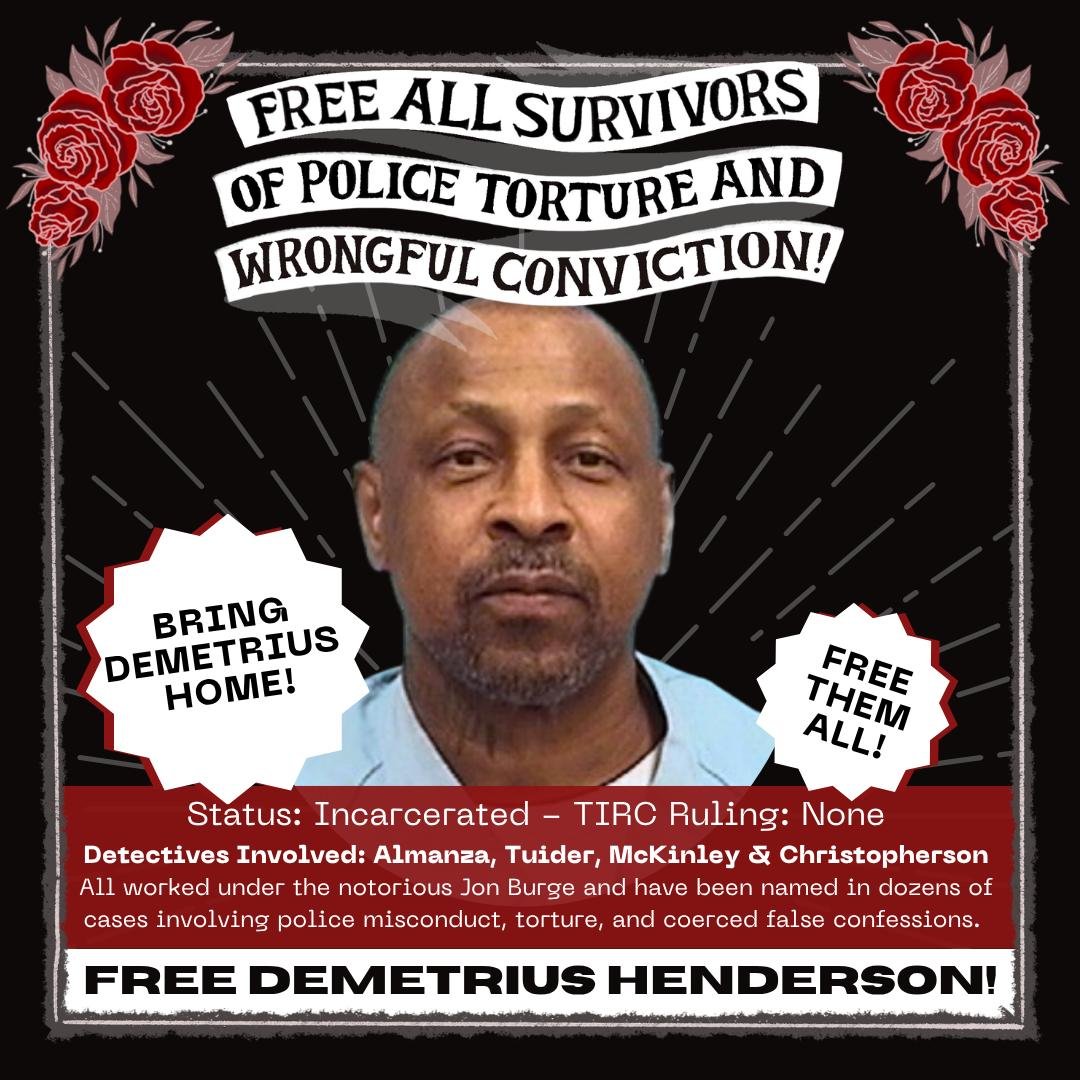
It is now well established that Chicago Police officers perpetrated a widespread pattern and practice of abuse in Areas 2 and 3 of the Chicago Police Department from the 1970s through 1990s. However, it was not until many years after Croft’s conviction that courts recognized the pattern and practice of abuse. The officers involved in the investigation of this case and the interrogation of Croft - Detectives Almanza, Tuider, McKinley, and Christopherson - all worked under the notorious Jon Burge and have been named in dozens of cases involving police misconduct, torture, and coerced false confessions.
As this Court is surely aware, the abuses by Burge and his subordinates is well documented. For example, in 1999, U.S. District Court Judge Milton Shadur held that “it is now common knowledge that in the early to mid 1980’s Jon Burge and many officers working under him regularly engaged in the physical abuse and torture of prisoners to extract confessions. Both internal police accounts and numerous lawsuits and appeals brought by suspects alleging such abuse substantiate that those beatings and other means of torture occurred as an established practice, not just on an isolated basis.” U.S. ex. rel. Maxwell v. Gilmore, 37 F. Supp. 2d 1078, 1094 (N.D. Ill. 1999).
In 2000, the Illinois Supreme Court recognized the importance of the newly discovered evidence of torture and ordered that four death row inmates be afforted evidentiary hearings on their allegations of torture. See e.g. People v. Patterson, 192 Ill. 2d 93 (2000). In April of 2002, a special prosecutor was appointed to investigate the various allegations of torture and investigate weather ceiminal charges could be brought against the officers involved.
In July 2006, the report of the special prosecutors was released with findings that torture occureed in 74 of the 148 cases investigated and that torture allegations “seemed to center on a crew known as the Midnight crew.” Exhibit 16, Report of the Special State’s Attorney, Edward J. Egan and Robert D. Boyle. The report further found that “the commander of the Violent Crimes section of Detective Areas 2 and 3, Jon Burge, was guilty of [prisoner] abuse…[and] it necessarily follows that a number of those serving under his command recognized that, if their commander could abuse persons with impunity, so could they.” Id. A subsequent “Shadow Report” compiled by community activists and lawyers further detailed the torture allegations and findings, documenting 107 cases of police torture and abuse at Areas 2 and 3. Exhibit 17, a Report on the Failure of Special Prosecutors Edward K+J. Egan and Robert D. Boyle to Fairly Investigate Police Torture in Chicago, April 27, 2007. The allegations included electric shock, suffocation, racist abuse, beatings, mock executions, denial of lawyer, denial of bathroom, sleep deprivation, and more. Id. at 33-35.
In the years since, dozens of additional cases of torture have come to light, some involving the same officers listed in these reports and others naming additional officers, including the detectives in this case. It is now clear that the culture of torture and misconduct was rampant in the 1970s-1990s across the Chicago Police Department and certainly not limited to Burge and his direct subordinates. See, e.g., People v. Montanez, 2016 IL App (1st) 133726, People v. Serrano, 2016 IL App (1st) 133493 (finding “profoundly alarming acts of misconduct” by Det. Guevara that “warrant closer scrutiny by appropriate authorities”); People v. Galvan, 2019 IL App (Ist) 170150 (granting post-conviction relief based on the pattern and practice evidence against Det. Switski); Exhibit 18, People v. James Marshall, 88 CR 11817-01, Order Granting Post-Conviction Relief (granting relief based on the pattern and practice evidence against Dets. Almanza, Vallandigham, Ptak, Duffin, and Breska).
A. Detective Almanza Has Been Accused of Torture and Worked Alongside Burge and Other “Midnight Crew” Members
As detailed supra, Tieicekve, ATH beat and threatened Croft in order to force a false confession.
Det. Almanza has been accused of similar misconduct and worked alongside Burge himself as well as several of his known associates who tortured and mistreated suspects.
Indeed, Det. Almanza was accused of torture alongside Bee and Det. Michael Kill in the cases of Marvin Reeves and Ronald Kitchen, both of whom were later exonerated. Reeves testified that police kicked in his door and held a gun to his head and his girlfriend’s head in bed, threatening him, “nigger, if you move, I’ll blow your brains out.” Exhibit 19, Marvin Reeves Testimony (7/15/15), p. 195. Officers then shackled him while he was nude and transported him to Area 3, where they clothed him before taking him inside the station. Id. at 198-99. He was then taken to a small room, handcuffed to the wall, and left alone for a while. Id. at 201-02. Over the course of his interrogation, he was shown photos of “a woman’s charred body,” administered a lie detector test, hit and kicked him repeatedly, threatened with guns, denied a phone call, and more. ID. at 207-51. Reeves could hear screams, as though someone were in excruciating pain, and believed they were coming from Kitchen. Id. at 214, 219/ Both Eric Wilson and Kitchen were brought into his room at different times and told him they were being beaten. Id. at 230-32.
When Reeves and Kitchen were taken to bond court, the public defender who stepped up that day informed the court that both Reeves and Kitchen “indicated…that they were injured at the police station; they indicated they were beaten by the police. For the record, they stated that they have injuries to the head, the backs, their groin areas; they wish to see a doctor for those reasons.” Exhibit 20, Reeves and Kitchen Transcript (08/27/1998). When Reeves and Kitchen again appeared before in the court the following day, Reeves’ attorney stated for the record “that there are allegations for the Defendant that he has been beaten, struck and abused.” Exhibit 21, Reeves and Kitchen Transcript (08/27/1998), p. 4. After a black eye was noted by defense counsel, the judge ordered that photographs be taken of injuries and that Reeves be taken to the hospital. Id. at p.5. He was thereafter treated at the Cook County Hospital. Ex. 19, p. 239, 273.
Similarly, Kitchen testified that he was handcuffed to the wall and beaten and kicked by detectives over many hours. Exhibit 22, Kitchen Motion to Suppress Testimony, p. 146-48. Detectives used a telephone handset and blackjack to beat Kitchen in the ribs and groin and a telephone book to hit Kitchen in the head. Id. at 150, 162. Detectives denied his requests for a phone call and an attorney. Id. at 179; see also Exhibit 23, Kitchen Second Amended PC, p. 29. Tired, scared, and beaten, Kitchen finally agreed to say what the officers wanted. Ex. 22 at 172-73; Ex. 23 at 28. As a result of the beatings, Kitchen suffered swelling to his ribs and groin and was given a sling to support his scrotum by doctors at Cermak. Ex. 22 at 187-88.
Eric Wilson, Kitchen’s cousin, was also arrested and interrogated in this matter. See Exhibit 24, Wilson Testimony at Motion to Suppress Hearing (02/02/1990). Wilson was elbowed hard in the head and made to lie on the floor of the police car on the way to Area 3. Id. at 257. Once at the station, Wilson was left in a dark room before a tall, heavyset, dark haired, “Mexican,” officer entered the room and kicked Wilson twice between the legs. Id. at 245-64. He was cuffed to the wall and shown pictures of the fire victims. Id. at 246, 248. Wilson heard Kitchen’s screams and the police abuse. Id. 246-47, 249. Wilson testified that he “was whooped until [he] fell out of the chair” and “hit all in the face and the groins and in the chest and with a lead bat…one of them souvenir bats. I was getting cracked on across the head with it.” Id. at 250, 264, 276. At one point, Wilson and Kitchen were sat together in an interrogation room, where Wilson observed Kitchen moaning, beaten, and in visible pain. Id. at 250, 272. Later Wilson again saw Kitchen bent over and in severe pain. Id. at 251. Wilson’s attorney arrived at the station, and Wilson told him of the abuse, Id. at 284.
Reeves and Kitchen were wrongly convicted on the basis of their false confessions. Exhibit 25, Reeves Complaint, p. 9. In 2009, both men were exonerated following the discovery of Brady violations and the overwhelming evidence of the patter and practice of abuse and misconduct by officers involved in their case. Id. at 10; see also Exhibit 26, Kitchen Complaint. Both men were also awarded certificates of innocence. Id. The civil suits brought by Kitchen and Reeves against the City of Chicago, the Chicago Police Department, and the officers settled for $12.3 million. See Hal Dardick, More Burge Torture Settlements. $12.3 million, Chicago Tribune, https://www.chicagotribune.com/news/ct-xpm-2013-09-05-chi-more-burge-torture-settlements-123-million-20130905-story.html.
James Marshall was recently ordered a new trial after presenting credible evidence that he was tortured in order to force a false confession by Det. Almanza and others at Area 3 in 1998. Exhibit 18, People v. Marshall, 88 CR 18817-01, Order Granting Post-Conviction Relief. Det. Almanza, along with other detectives, beat Marshall as he was held by his neck over a table. Exhibit 27, Marshall Post-Trial Motion, p. 4. Marshall was then held out of a window while detectives threatened to drop him and shoot him if he survived the fall, during which time Det. Almanza stood in the parking lot with his gun drawn. Id. Detectives then alternated asking Marshall to sign a confession and beating him when he refused. d. Marshall was denied access to the bathroom and a lawyer. Id. at 5. According to Marshall, Det. Almanza played an active role in his abuse and mistreatment. Based on the pattern and practice evidence presented against Det. Almanza and others, Marshall’s conviction was vacated and a new suppression hearing ordered on February 8, 2019. Ex. 18. The Appellate Court thereafter affirmed the order granting post-conviction relief. People v. Marshall, 2019 IL App (1st) 190441(U).
Notably, Det. Almanza was trained by Det. McCann and partnered with Det. Breska, both of whom have been accused in numerous cases of similar patterns and practices of misconduct. Exhibit 28, Det. Almanza Deposition Transcript, p. 22.
In 1991, a citizen made a complaint alleging that he was repeatedly slapped and mistreated in the presence of then-Sergeant Leroy Almanza, who observed the abuse and did not intervene. Exhibit 29, Det. Almanza Complaint Registers, p. 1-3.
In 1994, a fellow officer accused Almanza of making derogatory remarks about Black officers, saying, “Blacks did not do well on the Lieutenants exam because they have a reading problem and come from public schools.” Id. at 4-6.
B. Det. Tuider Has a History of Similar Misconduct and Worked Alongside Burge and Other “Midnight Crew” Members
As laid out supra, Det. Tuider initiated Croft’s interrogation and brought Croft to an interrogation room at the request of Det. Almanza.
Det. Tuider has since been accused of similar misconduct in several cases. In fact, Det. Tuider was involved in two of the most notorious cases of false confessions in Chicago history: the Marquette Park Four and the Englewood Four.
In the Englewood Four case, he was accused alongside known “midnight crew” members Boudreau, Paladino, Cassidy, Coughlin, and Foley of coercing false confessions out of five teenagers: Jerry Fincher, Harold Richardson, Michael Saunders, Terrill Swift, and Vincent Thames. See, e.g., Exhibit 30, Richardson Complaint.
In this 1995 case, police first interrogated learning-disabled teenager Jerry Fincher, holding him for two days in handcuffs while they interrogated, threatened, and beat him. Id. at 10. He was told if he cooperated, he could go home. Id. at 10-11. Eventually, he signed a false confession implicating Saunders, Swift, Richardson, and Thames. Id.
Eighteen-year-old Vincent Thames was taken to the station and interrogated over many hours while being threatened and promised he could go home if he confessed. Id. at 12-13. He eventually signed a false confession under the pressure. Id. at 13.
Terrill Swift, who was just 17 years old, was interrogated for hours without a parent, guardian, or attorney, denied a phone call, threatened, and promised he could go home if he signed the confession, which he eventually did. Id at 13-14.
Next, 16-year-old Harold Richardson was arrested and threatened with death before a lengthy interrogation without a parent, guardian, attorney, or youth officer while handcuffed to the wall and told others had already implicated him in the murder. Id. at 15-16. After many hours and promises that he would be released if he made a statement, he succumbed to the pressure and gave a false confession. Id. at 16.
Finally, 15-year-old Michael Saunders was arrested, handcuffed, and interrogated for many hours while denied his mother or an attorney. Id. at 18. Officers ripped an earring out of his ear and threatened to take him to the railroad tracks and shoot him. Id Saunders eventually signed a false confession to end the abuse. Id. at 16
Detectives fed facts to each of the boys to make the false confessions appear more reliable. Id. at 19. DNA testing eventually proved that one person committed the brutal rape and murder at the center of this case—Johnny Douglas, who was inexplicably present at the-crime scene and had committed similar crimes, including rape and murder, in the years leading up to and following this crime. Id. at 6-9, 39-40; see also Exhibit 31, Englewood Four Order for Certificate of Innocence. On November 16, 2011, Richardson, Saunders, Swift, and Thames had their convictions vacated and new trials ordered. Exhibit 32, Englewood Four Order for New Trial. They were thereafter granted certificates of innocence. Ex. 31. The civil suits brought by these men for their wrongful convictions were settled for a total of $60.6 million. See Jon Seidel, Legal bog surrounds final settlement for 3 of the Englewood Four,’ Chicago Sun-Times, https://chicago.suntimes.com/2019/1/7/18344082/legal-bog-surrounds-final-settlement-for-3-of-the-englewood-four.
In the Marquette Park Four case, Det. Tuider was named alongside known “midnight crew” members Boudreau, Cassidy, and Coughlin in a similar case involving false confessions coerced from teenagers Troshawn McCoy, Larod Styles, Charles Johnson, and Lashawn Ezell. See Exhibit 33, Ezell Complaint. In this 1995 case, officers first arrested, interrogated, and isolated 17-year-old Troshawn McCoy, without any evidence that he was involved in the crime. Id. at 5. Detectives denied him an attorney, fed him information about the murders, and harshly interrogated him. Id. He eventually implicated himself and Styles, Johnson, and Ezell in a false confession. Id. at 6.
Next, 16-year-old Larod Styles was arrested and interrogated for hours without a parent, guardian, or attorney while handcuffed to the wall. Id. at 7. He eventually succumbed to the pressure and signed a false confession. Id.
Nineteen-year-old Charles Johnson was then arrested and taunted, handcuffed to a wall for several hours, and subjected to hostile and aggressive interrogation tactics. Id. at 8. He was denied a lawyer. Id He eventually signed a document, not realizing it was a false confession. Id. at 9.
Last, officers arrested 15-year-old LaShawn Ezell, interrogating him for hours without a parent or attorney and threatening him. Id. at 10-11. Ezell eventually signed a false confession. Id.
The four teenagers were wrongly convicted based on these false confessions. See Exhibit 34, Ezell, Johnson, Styles COI Petition. Eventually, fingerprints pointed to convicted felons with no connection to these boys, and they were exonerated and granted certificates of innocence. Id.; Ex. 33 at 12; Exhibit 35, Ezell, Johnson, Styles COI Order.
Det. Tuider was also named in the case of James Kluppelberg, alongside Burge, Det. Boudreau, and Det. McKinley, wherein Kluppelberg was arrested, handcuffed, beaten, and kicked by detectives. Exhibit 36, Kluppelberg Complaint, pp. 6-7; see also Exhibit 37, Kluppelberg Motion to Suppress Testimony, R. 187. Kluppelberg asked for his lawyer, but was told he was going to confess, at which point the beatings began. Ex. 37, R. 187. Officers further threatened him if he did not stick to their version of events. Id. at R. 188. Kluppelberg was so severely beaten that he urinated blood and was diagnosed with a hematoma to his lower back and kidneys. Ex. 36 at 7. Kluppelberg’s girlfriend, a Cook County Deputy Sheriff, and his lawyer all testified to the bruising on Kluppelberg’s body directly following the interrogation. Ex. 37 at R. 154-78 . Though he falsely confessed to the crime, the trial court actually suppressed his statement because “[t]here is no disagreement” that there was “mistreatment by the police.” Id. at R. 216. However, officers manipulated and forced false statements out of others and manufactured evidence in order to wrongly convict Kluppelberg. Ex. 36 at 8-9. In the end, Kluppelberg served 24 years wrongfully before he was exonerated following the discovery of undisclosed evidence of his innocence. Id. at 11. Kluppelberg was thereafter granted a certificate of innocence. Exhibit 38, Kluppelberg COI. Kluppelberg’s civil suit was settled for $9.3 million. See Jason Meisner, City agrees to pay $9.3 million for wrongful conviction tied to Burge detectives, Chicago Tribune, https://www.chicagotribune.com/news/breaking/ct-met-wrongful-conviction-jon-burge-20180110-story.html.
In 1985, Michael Williams testified at a motion to suppress that he was coerced to give a false confession after he was arrested at gunpoint and Det. Tuider handcuffed him to the interrogation room wall and denied him a lawyer. See People v. Williams, 272 Ill. App. 3d 868, 872-73.
In 1995, a citizen filed a complaint alleging that Tuider failed to identify himself as a police officer and placed the complainant in a headlock and twisted her arms behind her back. Exhibit 39, Det. Tuider Complaint Register.
During his CPD career, Tuider worked under the command of Jon Burge, later becoming a sergeant himself and supervising Cassidy, Boudreau, Halloran, O’Brien, Paladino, Coughlin, and others, who courts have found to have perpetrated patterns and practices of abuse and misconduct. See Exhibit 40, Det. Tuider Transcript Excerpt, p182-83, 189-93.
C. Det. Christopherson Worked Alongside Burge and the Midnight Crew and Has Been Accused of Systemic Misconduct
Det. Christopherson was involved in the initial interrogation of Croft and watched over him while he was held for hours and tortured. See supra.
Det. Christopherson has worked with Burge as well as Boudreau, Halloran, Kill, and O’Brien, all members of Burge’s midnight crew who ieeetied his policies of torture. Indeed, Det. Christopherson was named alongside these men in a suit brought by Harold Hill. Exhibit 41, Hill Complaint, p 4. In 1992, Det. Christopherson and these other officers physically abused Hill to force a false confession when he was just 18 years old. Id Hill consistently testified that he was struck in the ribs, slapped, hit, and subjected to mental stress by the officers who interrogated him. See, e.g., Exhibit 42, Hill Trial Testimony, p. K49, 54-55, 56-58, 62, 64. When Hill repeatedly denied involvement, he was further abused. Id. at K62-63. He eventually signed a false confession because he was afraid of continued abuse and that the detectives might even kill him. Id. at K64-65, 67-68.
Dan Young was also interrogated in the same matter and testified that detectives kicked and hit him. Exhibit 43, Young Motion to Suppress Testimony, p. 17-18. Young was illiterate and had an IQ of 56, yet was denied a lawyer. Ex. 40 at 5. Fearing further abuse, Young signed a false confession. Ex. 42 at 17-18.
Also in that case, Peter Williams was struck in the face, beaten with a blackjack, and threatened repeatedly with physical harm and a gun when he was 19 years old. Exhibit 44, Williams Motion to Suppress Testimony, E8-28. He was handcuffed to a radiator for hours and denied access to the bathroom. Ex. 40 at 6. Detectives even put a pistol in his mouth and pulled the trigger, terrifying Williams. Id. After hours of interrogation and abuse, he finally succumbed to the abuse when detectives told him he was too young to be charged and provided a false statement. Exhibit 45, Williams Trial Testimony, K147. Jail records soon proved he could not have committed the crime as he was in jail on an unrelated matter. Ex. 40 at 7. Williams was released, but the prosecution against Hill and Young nonetheless proceeded. Id.
DNA testing later proved their innocence, and their convictions were vacated in 2005. Id. at 8-9. The City of Chicago settled the civil suit brought by Harold Hill for $ million. See Jessica Guido, Burge Victim to Get $1.25 Million, NBC Chicago, https://www.nbechicago.com/news/local/burge-victim-to-get-125-million/1912557/.
In 1990, Christopherson and other officers tortured Demond Weston, handcuffing him to a chair, denying him a parent or attorney, physically abusing him, threatening him, and mentally abusing him in order to force a false confession when he was just 17 years old. Exhibit 46, Weston Complaint, p. 5-6. In 2016, after mountains of evidence of the pattern and practice of abuse of the officers had come to light, Weston was ordered a new trial. Id. at 8. The charges were dismissed in 2019. Id.
D. Det. McKinley Has Been Accused of Significant Misconduct and Worked D. Alongside Burge and His “Midnight Crew”
Detective McKinley was also named in the James Kluppelberg case, which involved a coerced, false confession resulting from torture, threats, and denial of an attorney. See supra at VII(B). Kluppelberg was so severely beaten that he urinated blood and was diagnosed with a hematoma to his lower back and kidneys. Ex. 36 at 7. He was later exonerated and granted a certificate of innocence following the discovery of undisclosed evidence of his innocence. Id. at 11; Ex. 38.
In 1989, a citizen complained that Det. McKinley forced his way into complainant’s home and cocked a gun at the heads of his children and threatened to “blow their fucking heads off.” Exhibit 47, Relevant Det. McKinley Complaint Registers, p. 2-12. Det. McKinley further flicked a child on the head and was verbally abusive and threatening. Id.
Also in 1989, Det. McKinley was accused of beating, threatening, and psychologically abusing a suspect in order to force a false confession. Id. at 67-79. The accuser was freed following two trials and an appeal and brought a civil suit against McKinley and other officers. Id The complaint registers are redacted, but this appears to be the case of Marcus Gonzalez, who alleged that he was beaten by detectives and forced to sign a confession in July 1989. Gonzalez v. Entress, 1996 WL 417574, *1-2 (N.D. Il).
In 1999, McKinley resigned after a complaint was filed by an Illinois State Trooper against McKinley for belligerent behavior during a traffic stop. Id. at 224-26.
In 1973, McKinley was working off-duty as a security guard at McCormick Inn when he was involved in an altercation with a patron, Michael McDonnell, in the parking lot. McDonnell v. City of Chicago, et al., 102 Ill. App. 3d 578 (1981). According to McDonnell’s testimony and that of his wife, McKinley shouted profanities and that McDonnell was under arrest Id. McKinley then drew his gun and threatened to shoot McDonnell before, in fact, shooting him in the leg. Id Bystanders successfully disarmed McKinley after 2-3 shots were fired. Id. A jury awarded McDonnell $225,000, and the Appellate Court affirmed. Id.
V. Current Proceedings
Croft now presents this Court with post conviction arguments gleaned from the aforementioned facts, including his actual innocence and newly discovered evidence supporting his argument that his (along with all his codefendants) confessions were coerced. He asks this Court to order a new trial, or at a minimum, order a new sentencing hearing.
ARGUMENT
I. NEWLY DISCOVERED DNA EVIDENCE ESTABLISHES THAT CURTIS CROFT’S CONFESSION WAS FALSE, ANTHONY WOODARD’S TESTIMONY WAS SELF-SERVING AND FALSE, AND CROFT IS ACTUALLY INNOCENT OF THE RAPE AND MURDER OF KIMBERLY BOYD.
Curtis Croft is actually innocent of the rape and murder of Kimberly Boyd. At trial, the State’s case rested primarily on the testimony of Anthony Woodard and Croft’s purported confession. Both Anthony and Croft’s statement claimed Croft and Henderson sexually assaulted Boyd and took her to an alley where they stabbed her to death. However, since trial, evidence has come to light that establishes that Croft did not have intercourse with Boyd as Croft’s “confession” and Anthony’s testimony claimed. Instead, the evidence suggests that Anthony, one of two people that had a reason to be enraged with Boyd that night, murdered her after he learned that Boyd was cheating on him with his brother. Police reports establish that Anthony was brought to the police station after being identified as the last person to be seen with Boyd. Thereafter, evidence supports a conclusion that he set up Croft and Henderson by telling police they were the last people seen with her and had sexually assaulted Boyd prior to taking her away. Detectives latched on to this false narrative, brought Croft and Henderson to the police station, and physically and psychologically coerced Croft and Henderson until both agreed to go along with Anthony’s made-up story.
Specifically, Croft has now obtained new DNA evidence from the vaginal swabs taken from Boyd during her es The results show that the swabs contain DNA from two unidentified males, neither of which match the DNA of Croft or Henderson (or their codefendants). This evidence, unavailable at the time of trial, establishes that Croft’s confession was false and supports what Anthony now admits - he perjured himself at Croft’s trial. Furthermore, Croft has obtained a GPR police report that was unknown at the time of trail, that report establishes that a witness heard someone yell “Anthony don’t hit me no more” at the exact time and location this murder was occurring. This police report is corroborated by a post conviction statement by Anthony where he admitted that on the night Boyd was murdered he learned that Boyd was having sex with his brother and the two broke up. Finally, since Croft’s trial a plethora of evidence has come to light establishing that Detectives Almanza, Tuider, McKinley, and Christopherson routinely engaged in a practice of coercing confession from innocent defendants. This new evidence supports Croft’s claims, made over 35 years earlier, that Detectives forced him to falsely confess to this crime.
The newly discovered evidence presented in this petition puts the evidence at Croft’s trial in a new light. People v. Robinson, 2020 IL 123849, §48. It establishes that Croft did not sexually assault Boyd and that Anthony, not Croft, murdered Boyd. Croft is actually innocent of this crime and is entitled to anew trial.
A. Actual Innocence Standard
“The wrongful conviction of an innocent person violates due process under the Illinois Constitution and, thus, a freestanding claim of actual innocence is cognizable under the Post-Conviction Hearing Act.” People v. Barnslater, 373 Ill.App.3d 512, 519, (1st Dist. 2007) (citing People v. Washington, 171 Ul2d 475, 489 (1996)). In order for a claim of actual innocence to justify a new trial, it must be supported by evidence that is (1) newly discovered, (2) material and not cumulative, and (3) of such conclusive character that it would probably change the result.on retrial. Robinson, 2020 IL 123849 at P47. “The conclusive character of the new evidence is the most important element of an actual innocence claim.” Id. To determine whether the evidence supporting an actual innocence claim is of a conclusive character, the court must determine whether the new evidence “places the trial evidence in a different light and undermines the court's confidence in the judgment of guilt.” Id. at P48. “The new evidence need not be entirely dispositive to be likely to alter the result on retrial.” Id.
B. This New Evidence Would Change the Result at Retrial.
Here, the evidence presented in this petition places the trial evidence in a different light and undermines the confidence in Croft’s guilt. Robinson, 2020 IL 123849, 948. Indeed, the new evidence completely rebuts the State’s theory of the case. At trial, the State had only two pieces of evidence: Croft’s statement and Anthony’s inculpatory testimony. However, at the time of trial, Croft had no idea that Anthony had motive to kill Boyd, that he was an alternative suspect, and that a witness heard someone yelling Anthony’s name at the time and location of the murder, Had this evidence been presented at trial, Croft could have effectively established that Anthony was the real killer and falsely implicated Croft in this crime to cover up his involvement. Indeed, Boyd was stabbed numerous times in what can only = described as a crime of passion. Croft did not have a romantic relationship with Boyd, but Anthony did. It is now known, via Anthony’s affidavit, that Anthony and Boyd separated on the night Boyd was killed because Boyd was having sex with his brother. It was undoubtedly a very embarrassing experience for Anthony. All of this explains says witness heard someone screaming “Anthony don’t hit me not more” at the time and location of the murder. Anthony, embarrassed and enraged by Boyd’s infidelity, was in the alley beating Boyd.
The DNA evidence further supports this theory. At Croft’s trial, the State argued that Croft and Henderson killed Boyd because they were afraid of getting in trouble for raping her. However, the DNA conclusively established that neither Croft or Henderson had sex with Boyd. Thus, not only does this evidence establish that Croft is not guilty of the rape charges, but (95) Christopherson have a storied history of coercing false confessions. Had the court heard this information at Croft’s trial, it would have supported his argument that his confession was false and was only given due to the heavy handed tactics of the Detectives. Indeed, the use of Croft’s “coerced confession as substantive evidence of his guilt” could never be harmless error. People v. Wrice, 2012 IL 111860, P54
The evidence in this petition turns the State’s case on its head. Taken as true it | establishes: that Croft did not rape Boyd, that Anthony, not Croft, had a motive to commit this crime; that Anthony was present at the murder scene; and that Croft’s false confession was the product of coercion. As such, Croft has presented evidence that places the evidence at trial in a new light.
B. This New Evidence is Material and Noncumlative.
The evidence presented in this petition is also material and noncumlative. Evidence is cumulative only where it “adds nothing to what was already before the jury.” Oritz, 235 Ill. 2d at 335. Evidence is material when it is relevant and probative of innocence. People v. Coleman, 2013 IL 113307, P96.
The new DNA results are noncumlative because there was no DNA evidence presented at Croft’s original trial. Teed at the time of trial, the testing that was conducted on the vaginial swabs indicated that there was not DNA suitable a8 DNA testing. As explained in P??? the DNA results on the vaginal swabs are noncumlative because it establishes Croft did not sexually assault Boyd.
The police report establishing that a witness heard someone yelling “Anthony don’t hit me no more” at the time and location of the murder are noncumlative. There was no evidence presented at trial placing Anthony at the scene of the crime during the murders. Indeed, at trial Anthony denied being present. Furthermore, the police report is material as it offers strong evidence implicating Anthony as an alternative suspect.
Finally, Detective Almanza, Tuider, McKinley, and Christopherson’s pattern of coercing false confession is material. Their pattern of misconduct offers strong evidence to support Croft’s claims that his confession was the byproduct of coercion. See People v. Almodovar,’2013 IL App (1st) 101476,P 69 (explaining that “[t]he new evidence merely sought to establish a pattern and practice of abuse by Detective Guevara, which, if true, would have a severe negative impact on the credibility of Detective Guevara’s testimony that no such abuse occurred in defendants’ case”). And it is noncumlative because there was no evidence of these Detectives’ pattern and practice presented at Croft trial.
C. This Evidence is Newly Discovered.
The DNA evidence establishing that Croft did not have sex with Boyd is newly discovered. The post conviction DNA testing on the vaginal swabs in this case were conducted in 2017 using Plower Plex Fusion’s multiplex STR amplification kit, a state of the art DNA profiling kit. Such testing was undoubtedly unavailable at Croft’s trial as multiplex STR amplification kits did not become available for forensic use until 1996, nine years after Croft trial. See Forensic Science: An Encyclopedia of History, Methods, and Techniques, William J. Tilstone, et. al, page 40 (2006). And when those kits did become available they were nowhere near as sensitive as the kit used to amplify the vaginal swabs in this case.
The GPR report establishing that a witness heard someone yell “Anthony don’t hit me no more” is also newly discovered. It is evident from the record that this police report was not tendered to either the State or the Defense at the time of trial. Indeed, James Linn, now the Honorable Judge James Linn, represented Henderson during his trial proceedings. A large portion of Judge Linn’s defense at trial was that there were no witnesses in the area surrounding the alley that heard any signs of a struggle when the murder was occurring. Judge Linn used this supposed fact to support an argument that contrary to the Croft and Henderson's confession Boyd was not actually killed in the alley. It is inconceivable that Judge Linn would have made such an argument had he been tendered this GPR. And it is inconceivable that the State would not have used this report to rebut Judge Linn’s argument had they been in possession of it. A simple review of Judge Linn’s representation of Henderson at his suppression hearing shows the impeccable quality of Judge Linn’s work in this case. If he had this report, he would have utilized it.
Anthony’s affidavit explaining that he learned of Boyd’s affair with his brother and ae up with her on the night of the murder is similarly newly discovered. Anthony Testified at Croft’s trial and denied any involvement in the rape in murder. As such Anthony’s statement constitutes a recantation. See e.g., People v. Steidl, 142 Ill.2d 204, 261 (1 997) (holding that the recantation of trial testimony by a key State witness constituted newly-discovered evidence entitling the defendant to an evidentiary hearing).
Finally, Detective Almanza, Tuider, McKinley, and Christopherson’s pattern of coercing false confession is newly discovered. At the time of Croft’s trial these detective’s misconduct had not come to light. As such, Croft could not have possibly presented this evidence at his trial in 1987. See People v. Patterson, 192 Ill. 2d 93, 145 (2000); People v. King, 192 Ill. 2d 189, 198-99 (2000) (new evidence of police misconduct at Area 2, which did not come to light until after the defendants’ trials in those cases, was sufficient in terms of relevancy and materiality to call for relaxation of res judicata and to require evidentiary hearings on the petitioners’ claims of torture).
D. Conclusion
Curtis Croft did not rape an murder Kimberly Body. Instead, the new evidence presented in this petition raises a strong argument that Anthony Woodard murdered Boyd after discovering that she was having sex with his brother. Anthony then was questioned by police implicating Croft and Henderson to protect himself. Once detectives focused on Croft athey used coercive and heavy handed tactics to get him to confess to a rape and murder he did not commit. Croft is actually innocent and is entitled to a new trial.
II. NEWLY DISCOVERED DNA EVIDENCE ESTABLISHES CURTIS CROFT IS ENTITLED TO NEW SENTENCING HEARINGS
As discussed supra, Croft has presented newly discovered evidence that establishes that neither Croft nor Henderson had sexual contact with the Kimberly Body on the night of her death. However, in sentencing Croft to life imprisonment without the possibility. Of parole this Court relied on the fact that he had participated in a “gang rape” prior to the murder. (R. B39-41). Because Croft has presented newly discovered DNA evidence that establishes that Croft he did not “gang rape” or sexually assault Boyd, he is entitled to new sentencing hearings where the consideration of those crimes is absent. See People v. Medina, 221 Ill. 2d 394, 413 (2006) (noting that a sentencing rehearing in justified on the basis of newly discovered evidence where there is “a showing of due diligence and a demonstration that justice has not been done.”).
III. CURTIS CROFT WAS DENIED DUE PROCESS UNDER BRADY WERE THE STATE FAILED TO DISCLOSE EXCULPATORY EVIDENCE IMPLICATING ANTHONY WOODARD AS AN ALTERNATIVE SUSPECT.
As discussed in P??? supra, it is apparent from the record that the Defense was not privy to a police report establishing that a witness heard someone yelling “Anthony don’t hit me no more” at the same location of this murder and at the same time it occurred. Petitioner submits that the failure to tender this report to the Defense violated Curtis Croft’s right to due process under Brady v. Maryland, 373 U.S. 83 (1963).
The due process right to a fair trial entitles an accused in a criminal prosecution to discover evidence favorable to him. Brady v. Maryland, 373 U.S. 83, 87 (1963); U.S. Const., amends. V, XIV; Ill. Const. 1970, Art. I, §2; 210 Il. 2d R. 412(c). The prosecution bears a duty to disclose any exculpatory evidence, including information that could be used to impeach a witness even when the accused has not requested the information. Id.; Bagley, 473 U.S. at 676. To prevail on a Brady claim, a defendant must demonstrate that: (1) the undisclosed evidence is favorable to him because it is either exculpatory or impeaching; (2) the evidence was willfully or inadvertently withheld by the State; and (3) the evidence was material to guilt or punishment. Strickler v. Greene, 527 U.S. 263, 281-82 (1999). Undisclosed evidence is material “if there is a reasonable probability that, had the evidence been disclosed to the defense, the result of the proceeding would have been different.” Strickler, S27 U.S. at 280. A reasonable probability is “shown when the government’s evidentiary suppression ‘undermines confidence in the outcome of the trial.’” Kyles v. Whitley, 514 U.S. 419, 434 (1995) (quoting United States v. Bagley, 473 U.S. 667, 678 (1985)).
Croft has established a Brady claim. First, the “Anthony don’t hit me no more” GPR was not disclosed. As discussed in 4222, Croft’s codefendant, Henderson, was represented by Judge James Linn. Judge Linn would have undoubtedly used this report if it were tendered to him. Second, the GPR is exculpatory as it implicates Anthony, not Croft, in the murder. Finally, the GPR is material as it implicates an alternative suspect and calls into question Anthony’s motive in implicating Croft.
To the extent this court finds that the “Anthony don’t hit me no more” report was disclosed to trial counsel, trial counsel was ineffective for failing to present it.
Croft has made a substantial showing of a constitutional violation and is entitled to a new trial.
VI. PATTERN AND PRACTICE ARGUMENT
In 2014, Curtis Croft sent an application to the Torture Relief Inquiry Commission (“TRIC”). In that application, Croft explained the abuse he suffered at the hands of Area 2 Detective’s during his interrogation. Croft explained that during his interrogation he was beaten by Detective Lee Almaza. At one point, another interrogating detective, Detective Tuider, opened the window of the interrogation room and told Detective Almaza “let’s throw this dumb son of a bitch out of the window.” Croft was so frightened that he urinated his pants. In response, Detective Almaza called Croft a “weak bitch,” and told Croft he was going to die. One hour later, Detective Christopherson came back into the interrogation room and told Croft that Detectives Almaza and Tuider were planning on throwing him out of the window, shooting him in the back, and claiming Croft tried to escape. As a result of their threats, Croft confessed to Boyd’s rape and murder.
Croft’s claims regarding the detectives are mirrored by James Marshall and the numerous other cases detailed in this petition. (See P??? supra). In 2019, Judge Thaddeus Wilson granted James Marshall post conviction relief on the grounds that newly discovered evidence established that Detective Lee Almaza, as well as other Area 3 officers, engaged in a pattern and practice of misconduct. People v. Marshall, 88 CR 18817 (2019). During his testimony at the hearing, Marshall alleged almost identical abuse as Croft did in his TIRC application in 2014. Marshall testified detectives “grabbed him around the waist and another grabbed his ankles. They turned him sideways and [put his] head out the window.” At that point, another detective drew his weapons and “said Almaza and Breska were going back to [the scene] to look for more evidence and ‘they happened to see me escaping out the window. And if they happen to drop me out the window, I would have been shot if I survived the fall or if I don't survive the fall. And then he would have been coming in the room and happen to see me jumping out the window, says, freeze,’ runs to the window and he would have fired...as well.’” Marshall testified that the detectives were holding him halfway out the window, and that Detectives Almaza and Breska were in the parking lot with their guns drawn. Judge Wilson’s decision granting James Marshall post conviction relief was affirmed on appeal. People v. Marshall, 2019 IL App (1st) 190441-U
Given the striking similarities between Croft’s interrogation and the interrogation conducted in Marshall and the other cases detailing in this petition Croft established a Pattern and Practice of misconduct that entitles him to a new suppression hearing.
“In the context of a claim that newly discovered evidence would have likely altered the outcome of a suppression hearing, the purpose of [post conviction proceedings] is not for the trial court to determine the ultimate issue of whether a confession was coerced.” People v. Whirl, 39 N.E.3d 114, 129-30 (Ist Dist. 2015). Instead, the issue is not whether the confession itself was “voluntary but whether the outcome of the suppression hearing likely would have differed if the officer who denied harming the defendant had been subject to impeachment based on evidence revealing a pattern of abusive tactics employed by that officer in the interrogation of other suspects.” Jd. In determining whether pattern and practice evidence would have likely altered the outcome of the suppression hearing, the trial court should consider: “(1) [whether] any of the officers who interrogated defendant may have participated in systemic and methodical interrogation abuse [] and (2) [whether] those officers’ credibility at the suppression hearing might have been impeached as a result.” Id. Both considerations are present here.
Croft has established that the interrogating detectives participated in “systemic and methodical interrogation abuse.” As laid out in P???, Detective Almanza, Tuider, McKinley, and Christopherson engaged in a patterning of misconduct including physical and menial coercion to obtain false confessions from defendants. Indeed, the types of coercion utilized by Detective Almanza, Tuider, McKinley, and Christopherson are almost an exact mirror of the misconduct in Marshall. Additionally, had this evidence been available Crofi would have likely asked to have his confession suppressed on coercion grounds. Indeed, at the time of trial it was Crofi’s word against four detectives. It would have been a fool’s errand to try to suppress his confession. With the addition of this pattern evidence, Croit would have had a mountain of impeachment evidence to challenge the Detective’s denials and would have filed a motion challenging his confession on the grounds that it was coerced.
Croft has made a substantial showing of a constitutional violation and is entitled to an evidentiary hearing on this claim.
VI. FEDERAL CONSTITUTIONAL CLAIMS
Based on the facts pled supra, Croft has also established his federal constitutional rights have been violated. Indeed, a post-conviction petitioner also has a federal constitutional right under the due process clause to assert a free-standing claim of actual innocence, U.S. Const., Amend. V, XIV. House v. Bell, 547 U.S. 518, 3536-53 (2006). Moreover. the extraordinary DNA results, untendered GPR, affidavit from Anthony Woodaward, and pattern and practice of police coercion establishes, as asserted by Croft consistently since his trial, that his confession was false., U.S. Const., Amend. V, XIV. The newly discovered evidence results also establish that Petitioners did not receive a fair trial by an impartial jury, U.S. Const., Amend. VI, XIV.
CONCLUSION
WHEREFORE, Curtis Croft respectfully requests the following relief:
Docket this petition for further proceedings; or
Conduct an evidentiary hearing; or
Order a new trial; or
Vacate Petitioner’s conviction; or
Grant Petitioner a new suppression hearing; or
Grant Petitioner a new sentencing hearing; or
Respectfully Submitted,
Jennifer Blagg
Eric Bisby
BLAGG LAW
1333 W. Devon Ave, Suite 267
Chicago, IL 60660
(773) 859-0081
jennifer@blagglaw.net
Attorney No: 45099
EXHIBITS
GPR Excerpt
Henderson Statement
Curtis Croft Statement
Kevin Campbell Statement
Alonzo Woodard Statement
Anthony Woodard Statement
Affidavit of Alonzo Woodard
Affidavit of Anthony Woodard
Affidavit of Andrea Wilks
Croft petition filed with the Illinois Torture Inquiry and Relief Commission
Bode Cellmark Forensics report dated October 4, 2017.
Report of the Special State’s Attorney, Edward J Egan and Robert D Boyle
A Report on the Failure of Special Prosecutors Edward J Egan and Robert D Boyle to Fairly Investigate Police Torture in Chicago, April 27, 2007
People v. James Marshall, 88 CR 11817-01, Order Granting Post-Conviction
Marvin Reeves Testimony (7/15/15)
Reeves and Kitchen Transcript (08/27/1998).
Reeves and Kitchen Transcript (08/28/1988)
Kitchen Motion to Suppress Testimony
Kitchen Second Amended Post Conviction
Wilson Testimony at Motion to Suppress Hearing (02/02/ 1990)
Reeves Complaint
Kitchen Complaint
Marshall Post-Trial Motion
Det. Almanza Deposition Transcript
Det Almanza Complaint Registers
Riehardson Complaint
Englewood Four Order for Certificate of Innocence
Englewood Four Order for New Trial
Ezell Complaint
Ezell, Johnson, Styles COI] Petition
Ezell, Johnson, Styles COI Order
Kluppelberg Complaint
Kluppelberg Motion to Suppress Testimony
Kluppelberg COI
Detective Tuider Complaint Register
. Detective Tuider Transcript Excerpt
Hill Complaint
Hill Trial Testimony
Young Motion to Suppress Testimony
Williams Motion to Suppress Testimony
Williams Trial Testimony
Weston Complaint
Relevant Detective McKinley Complaint Registers